Illustration Tools
Posted under #illustration
Like most illustrators, I love nerding out over my tools and art supplies and have way too many tools than I realistically need.
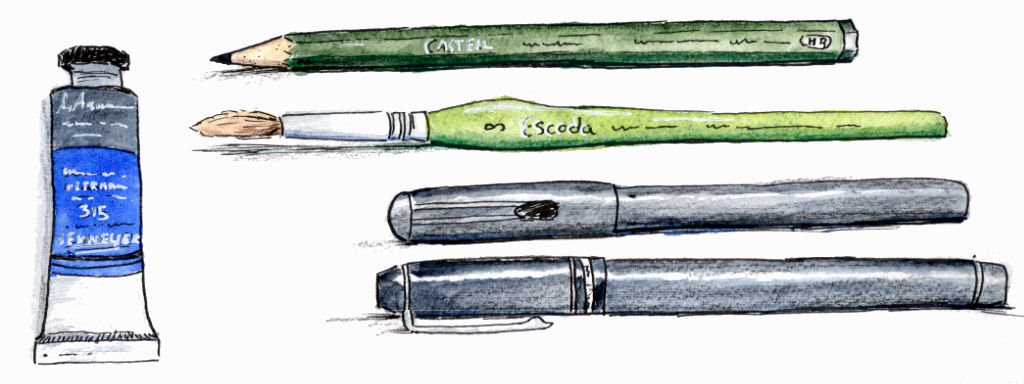
A word of caution: It is easy to fall into the rabbit-hole of art supplies. If you’re a beginner, stay away from this trap. It might appear like expensive tools will make you a better artist. They don’t. I learnt that lesson the hard way. You don’t need the expensive tools that your favourite influencer is promoting. They get paid to say good things about brands that pay them.
In reality, the tools don’t matter, but you already knew that and are most likely not here for that kind of advice, so here goes:
Pencils
Pencils are fun! Almost every illustration and character design starts with a rough pencil sketch, unless I am drawing in a sketchbook directly with a pen, brush or watercolour. Maybe it is just an old habit, but I find that my ideas flow better with a pencil, even though I never erase the pencil work in my rough sketches. To be honest, for this kind of rough work, any old pencil will do, but here are my favourites:
- Faber Castell 9000 [H, HB & 2B] wooden graphite pencils are my favourite. Something inexplicable about how a good wood cased pencil feels in the hand.
- Koh-I-Noor Versatil 5228 clutch pencil with Mitsubishi Uni 2mm Red lead. It’s small enough to carry everywhere and very well built.
- A kneadable eraser is invaluable for erasing construction lines without damaging watercolour paper. Whatever brand is available.
Goes without saying that a good pencil deserves a good sharpener. Since I don’t use my pencils for shading, anything that can make a nice point works for me. I have a generic desk mounted rotary sharpener and several small ones. They’re all good. A cheap blade works well too.
Inking tools
For inking/outlining my sketches and drawing directly in ink I use a combination of brush pens and fountain pens.
Platinum Carbon Black is my ink of choice, though I have a few other fountain pen friendly waterproof inks. PCB also comes in cartridges, which is a must when travelling.
Brush pens
I learnt inking with a regular brush first, but brush pens are so much more convenient. I don’t like the hard tipped felt brush pens. I want my brush pens to behave like real brushes. Much harder to control, but the lines have incredible character. This is one area you probably shouldn’t go for the cheap ones. My favourites:
- Pentel pocket brush pen. A popular favourite, for a reason. Incredible line variation, small and easy to carry.
- Kuretake number 8 brush pen. Technically better than the Pentel and it takes Platinum cartridges.
Given the choice, I would use only the Kuretake #8 since it is slightly better and takes platinum cartridges, but it’s a bit too long to fit into my small pen case, so I keep the Pentel in there. The Kuretake #13 would eliminate the need for 2 brush pens, but it isn’t available at a reasonable cost here.
Fountain pens
Ah, fountain pens! I have been a lifelong user of fountain pens. I just love the feeling of a fountain pen on paper and have acquired too many to list here. But here we’re talking about pens for art, which narrows it down to 3 (though I’ll happily doodle with any fountain pen).
- Platinum Preppy fountain pen with a fine nib. Cheap, writes and draws very well and can go for months without the ink drying out. Not that that’s a problem for me :). The best part? It takes Platinum Carbon Black cartridges for when I need a travel friendly option of carrying extra ink.
- Pilot Custom Heritage 91 fountain pen with a soft-fine nib. An excellent nib, with subtle line variation.
- Muji Aluminium Fountain Pen with a fine nib. This neat little pen has a surprisingly good nib for drawing.
A lot of artists prefer using flex and fude nib fountain pens, but I never warmed up to them (or even dip pens for that matter). Maybe because I spent years practising with a brush. No nib can match a brush. So for me, a fountain pen is just an assistant to my brush pen, for fine and delicate lines and also as a standalone drawing tool for quick and small sketches.
Watercolour
Watercolour is the icing on the cake. I have tried and given up other, more “convenient” mediums, including digital. The warm glow of watercolour and the subtle gradations make me enjoy the process of illustration. I’m not master of watercolour (I can’t do landscapes for example, which is where watercolour truly shines), but I have spent years painting my illustrations and can’t possibly think of switching to another way of colouring without feeling grumpy and frustrated. Enough said, here is what I use.
Paper
In my experience, good paper is more important than watercolour paints and brushes. If you’re in a pinch, get the best paper you can, compromising on paints and brushes (in that order). I frequently use these papers:
- Lana Aquarelle 300gsm cold pressed watercolour paper for “finished” work. I can’t justify the much more expensive Arches papers. These are really good.
- Any 300gsm 100% cotton paper for other work. The 100% cotton is most important.
- Any Sketchbook with a hard bound cover and 250gsm+ paper (need not be 100% cotton as my sketchbooks are just for experimenting and playing around).
Paints
- Sennelier L’Aquarelle watercolour tubes. Often criticised for not being as colourful as other options, but I love my Sennelier paints. If only the pans were available here, I would use only Sennelier.
- Holbein Artist watercolour tubes squeezed out into half-pans are beautiful and easy to control. I use them occasionally when I can’t take tubes of Sennelier around, especially for location sketches.
Sennelier paints aren’t cheap (though not the most expensive), nor are they necessary for the kind of work I do, but I happened across them in Europe when I didn’t have my (excellent) Camlin watercolours with me. Have stuck to them for over a decade now.
Brushes
Brushes are the least important of the 3 watercolour tools. For the longest time I used cheap, locally available watercolour brushes without any complaints. Then I was gifted some top quality Escoda Versatil and Barocco watercolour brushes by my aunt. Now I use these almost exclusively along with Pentel Aquash water-brush. I find that a ceramic palette works great for mixing paints. I carry a small one even when travelling.
Digital Illustration
I rarely do digital work, but when I do, I use an iPad Air (5th gen) with the Apple Pencil and Procreate. The default Procreate brushes are more than I need. The Internet is ripe with people selling their brush sets and making it look like the default brushes are useless. But then, what do I know, I’m not really a digital artist.
One more thing…
Phew, that was a long post. I’ll end by saying this - learn your skills with whatever is available, but look for brands that have been around for at least a few decades. These companies have entry level products that are at least 80% as good as their more expensive lines. The only advantages to their more expensive lines are things you don’t need when learning, like build and archival qualities.
Stick to those brands until you know what you’re doing. Stick to them even after that if you can, upgrading to their more expensive products. Can’t go wrong with companies that have been making art supplies for hundreds of years. A new manufacturer might catch your eye and look lovely on trending reels, but the older companies know what they’re doing. They may not be spending as much on marketing as the others and they’re not going to disappear overnight.